

Bronze Kuzhiappam Pan (7-Pit Paniyaram Pan)
Bronze Kuzhiappam Pan (7-Pit Paniyaram Pan)
Couldn't load pickup availability
Bronze Kuzhiappam Pan (7-Pit Paniyaram Pan)
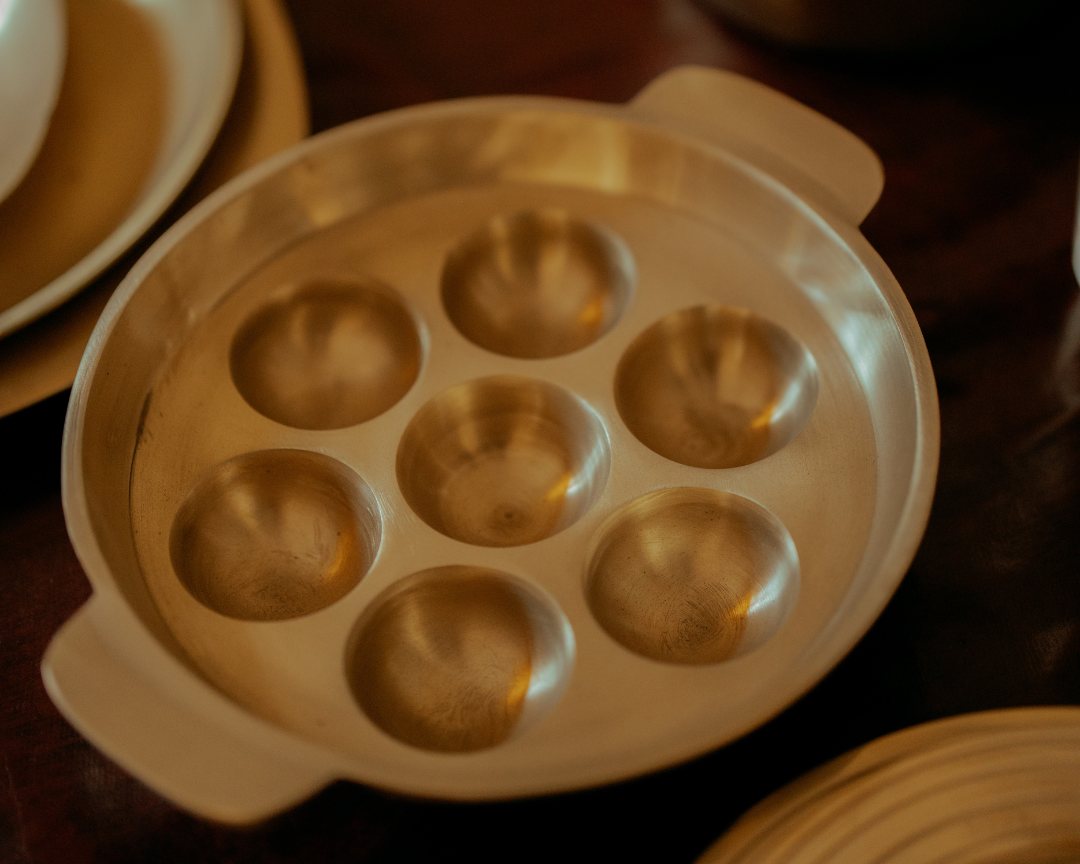
Seven deep, evenly cast cups in solid bronze — built for one job, done well: turning batter into golden, crisp-edged kuzhiappam, paniyaram, paddu, or ponganalu, the way it’s been done in Kerala kitchens for generations.
Product Overview
| What it is | A 7-cavity bronze pan for cooking kuzhiappam, paniyaram, paddu, and ponganalu — small, round South Indian snacks made from rice or rice-lentil batter. |
| Where it’s made | Cast at AKP’s own foundry in Irinjalakuda, Kerala — the same workshop that has shaped temple-grade bronze and brass for four generations since 1896. |
| Why bronze | Bronze holds and releases heat slowly and evenly, so each piece cooks through with a consistent crust and soft centre, without needing much oil. |
| Fit on the stove | The 8.5-inch diameter sits comfortably on a standard gas stove. |
| Handling | At 2.300 kg, it has enough heft to stay stable while cooking, without being heavy to lift or wash. |
What You Can Make In It
| Dish | Region | Description |
|---|---|---|
| Unniyappam | Kerala | A jaggery-and-banana sweet, fried to a dark golden crust in each cup. |
| Kuzhi Paniyaram | Tamil Nadu | A savoury version made from fermented rice-and-lentil batter, crisp outside and soft inside. |
| Paddu / Ponganalu | Karnataka / Andhra | The same dish under different names, often made using leftover dosa or idli batter. |
Specifications
| Material | Bronze |
| Diameter | 8.5 Inch |
| Height | 2 Inch |
| Weight | 2.300 kg |
| Cavities | 7 Pits |
| Stove Compatibility | Gas Stove |
Caring For Your Bronze Pan
| Before first use | Heat a few drops of oil in each pit and wipe with a cloth. This seasons the bronze and builds a light non-stick layer over time. |
| After cooking | Wash with warm water and mild soap. Dry it fully right after — bronze left wet tends to spot. |
| Storing it | Keep it somewhere dry and ventilated. If stacked with other vessels, use a soft cloth between them to prevent scratches. |
| If it tarnishes | Rub with tamarind and salt, or lime and salt, to bring the shine back. Pitambari diluted in water works too, for a quicker clean. |
Frequently Asked Questions
Is this pan the same as an unniyappakara or appam maker?
Yes. Kuzhiappam pan, paniyaram pan, unniyappakara, and appam maker all refer to the same multi-cavity cookware — the name just changes by region.
Is bronze cookware safe for everyday cooking?
Yes. Bronze (an alloy of copper and tin) has been used in Kerala kitchens for generations and is considered safe for regular cooking once properly seasoned and maintained.
Can I use this pan on an induction stove?
No. This pan is designed for gas stoves only, as bronze is not induction-compatible.
Does the bronze need seasoning before first use?
Yes. A light coat of oil heated in each pit before first use helps build a natural non-stick surface, which improves with repeated use.
Will the bronze tarnish over time?
Some surface darkening is natural with bronze and doesn’t affect cooking performance. It can be polished back to shine using tamarind and salt, or lime and salt.
-
Ribbon and Flower Decorative Uruli
Regular price From Rs. 830.00Regular priceUnit price per -
Bronze kalam
Regular price From Rs. 4,500.00Regular priceUnit price perRs. 4,500.00Sale price From Rs. 4,500.00 -
Bronze Cooking Pot / Pana
Regular price From Rs. 3,375.00Regular priceUnit price perRs. 3,375.00Sale price From Rs. 3,375.00 -
Flower bowl - Brass finish
Regular price From Rs. 1,700.00Regular priceUnit price per -
Bronze Square Plate
Regular price From Rs. 788.00Regular priceUnit price perRs. 788.00Sale price From Rs. 788.00 -
Puttu Kodam (JF)
Regular price From Rs. 962.00Regular priceUnit price per -
Traditional Kerala AKP Lamp (Brass)
Regular price From Rs. 2,610.00Regular priceUnit price per -
Bronze Frypan
Regular price Rs. 2,925.00Regular priceUnit price perRs. 2,925.00Sale price Rs. 2,925.00 -
Bronze Uruli
Regular price From Rs. 1,463.00Regular priceUnit price perRs. 1,463.00Sale price From Rs. 1,463.00 -
Brass elephant Uruli
Regular price From Rs. 1,600.00Regular priceUnit price per -
Bronze Round Plate
Regular price Rs. 2,250.00Regular priceUnit price perRs. 2,250.00Sale price Rs. 2,250.00 -
Bronze Saucepan
Regular price Rs. 2,925.00Regular priceUnit price perRs. 2,925.00Sale price Rs. 2,925.00 -
Bronze Mortar and Pestle
Regular price Rs. 2,250.00Regular priceUnit price perRs. 2,250.00Sale price Rs. 2,250.00 -
Chiratta Puttu Cooker (JF)
Regular price Rs. 788.00Regular priceUnit price per -
 12% OFF
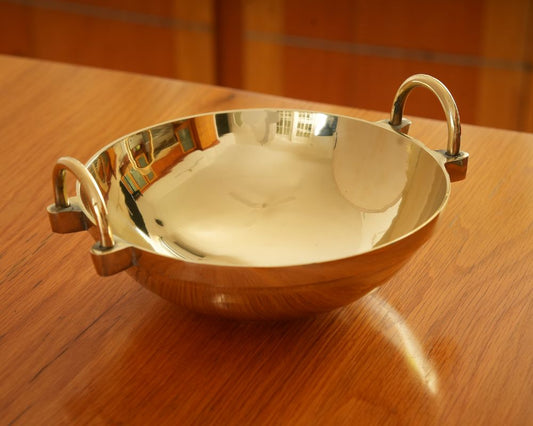
Bronze Kadai / Wok
Regular price From Rs. 3,375.00Regular priceUnit price perRs. 3,825.00Sale price From Rs. 3,375.00Sale -
Bronze Soup Plate
Regular price From Rs. 1,575.00Regular priceUnit price perRs. 1,575.00Sale price From Rs. 1,575.00 -
Bronze Bowl
Regular price From Rs. 1,575.00Regular priceUnit price perRs. 1,575.00Sale price From Rs. 1,575.00


